- The Daily Bite by Snack Prompt
- Posts
- 🍭 We’re Letting Machines Decide ⚖️


In partnership with


Good morning. Someone, somewhere, is teaching an AI to make rain on purpose.
Meanwhile, my plant is still dead.
Let’s dive in 👇
🍭 What’s Cookin’:
China is making rain with AI + drones (and it’s getting routine)
WEF says AI agents are quietly enforcing values
Microsoft pushes “community-first” data centers
Gemini gets more personal (opt-in, connected apps)
Steal This Prompt
🏋️ One-Click Personal Trainer

A “40-years-of-experience” personal trainer prompt that spits out a tailored plan based on your level, body stats, and goal.
Perfect for:
gym newbies who need a sane starting point
people who keep “starting Monday” (hi)
anyone who wants gender-aware training advice without doomscrolling fitness TikTok
Workflow:
Click this link (Prompt).
Paste into your AI model
Replace the #s with your fitness level, gender/age/weight, and goal.
Watch it cook: you just hired a trainer for the price of one copy/paste.

China
🌧️ Is Making Rain And Normalizing It

The Bite:
China has begun creating artificial rain in desert regions using a mix of rockets, drones, and AI-driven weather modeling.
The goal is straightforward: fight drought, reduce dust storms, and stabilize water supplies.
What’s new isn’t cloud seeding itself, but the scale, automation, and confidence behind it.
Weather modification is quietly moving from experimental to operational.
Snacks:
China used rockets and drones to seed clouds over arid regions, triggering measurable rainfall
AI models were used to predict optimal timing, cloud density, and dispersion patterns
Officials say the program helped reduce desert dust and increase localized precipitation
Similar techniques are already used by the U.S., UAE, and Russia, usually on a smaller scale
China has the world’s largest weather-modification program by area covered
Why it Bites:
This isn’t a sci-fi leap. It’s a normalization moment.
Weather control used to sound fringe and speculative.
Now it’s infrastructure; something you deploy, optimize, and scale.
AI makes it easier, cheaper, and more frequent.
That’s where things get complicated.
More rain in one region can mean less rain somewhere else.
Long-term ecological effects are still poorly understood.
And once countries start routinely “tuning” their weather, it raises uncomfortable questions about coordination, accountability, and who bears the downstream costs.
The technology isn’t the scary part.
The speed at which it’s becoming routine is.

Help us make better ads

Did you recently see an ad for beehiiv in a newsletter? We’re running a short brand lift survey to understand what’s actually breaking through (and what’s not).
It takes about 20 seconds, the questions are super easy, and your feedback directly helps us improve how we show up in the newsletters you read and love.
If you’ve got a few moments, we’d really appreciate your insight.

ToolBox™
🧰 5 BRAND NEW AI LAUNCHES
📣 Synter Media AI
An agentic AI that plans, launches, and optimizes ads across Google, Meta, LinkedIn, Reddit, and X.
🌱 Ardhi AI
Scan products to see their environmental impact and make climate-aware buying decisions.
🔍 LumiFind
Instantly search files across your computer and drives with private, offline AI semantic search.
✍️ Wryticle
Create keyword-led, long-form SEO content with structured workflows—from research to ranking.
💬 Fluenty
Add chat, voice calls, branding, and analytics to Retell AI agents without building custom widgets.

Which image is real?One is real. One is AI. |

Society
🧠 AI Agents Are Learning And Shaping Our Values

The Bite:
The World Economic Forum is asking a deceptively simple question:
How do we design AI agents for a world with many voices?
As AI assistants move beyond chat and into decision-making roles:
handling benefits,
moderating content,
teaching students,
guiding workers.
The issue isn’t whether they’re smart enough,
but whose values they quietly enforce along the way.
Snacks:
AI agents are increasingly used in public services, education, hiring, and online moderation
Most are trained on dominant languages, cultures, and norms that are often Western and corporate
The WEF warns this can flatten cultural differences into a single “acceptable” worldview
Governments want AI that reflects national values, while companies want systems that scale globally
Without guardrails, moral and cultural judgment gets outsourced by default
Why it bites:
AI agents don’t just answer questions. They shape outcomes.
When a system decides what speech is allowed, what behavior is “safe,” or which choice is “reasonable,” it’s making value calls.
Even if no one labels them that way.
At scale, those calls stop feeling like opinions and start feeling like rules.
The risk is quiet standardization.
A future where local norms, minority perspectives, and cultural edge cases get smoothed out because they’re harder to encode, regulate, or monetize.
Tech companies are building the agents. Governments are setting the boundaries. And humans are increasingly letting machines stand in for judgment they used to argue about themselves.
That’s efficient.
It’s also how values get decided without a vote.

Everything Else
🧠 You Need to Know
🌍 Global Risks Report 2026: The World Is on a Precipice
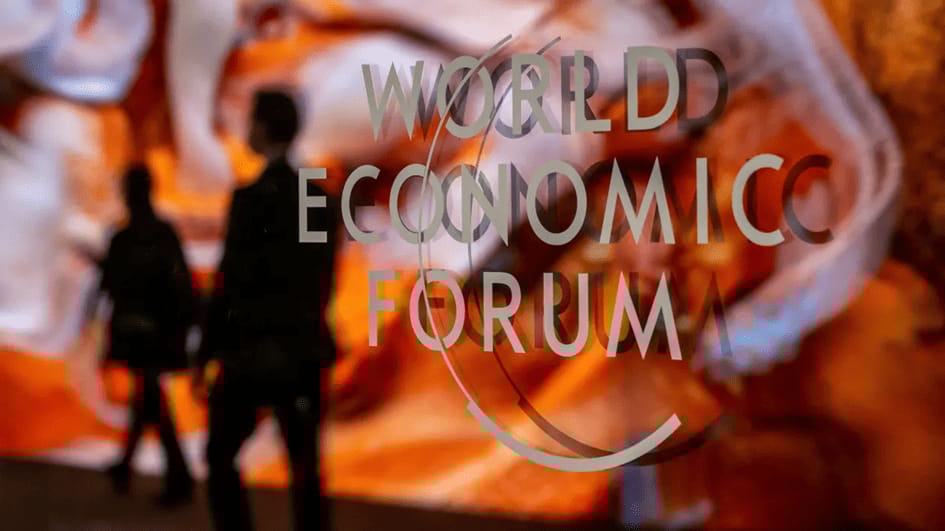
→ The World Economic Forum warns geoeconomic confrontation is now the top short-term global risk, while AI-related harms surged faster than any other threat as leaders brace for turbulence, conflict, and stalled cooperation.
🏗️ Microsoft Pushes “Community-First” AI Infrastructure
→ Microsoft says future AI data centers must benefit local communities, promising investments in jobs, energy fairness, and sustainability as AI infrastructure rapidly expands.

🧠 Google’s Gemini App Gets Personal
→ Google introduced “Personal Intelligence” for Gemini, letting users opt in to connect apps like Gmail and Photos so AI can offer more personalized help.
🗣️ Designing AI Agents for a World of Many Voices
→ The World Economic Forum argues future AI agents must reflect cultural diversity and pluralism, or risk reinforcing bias and concentrating power instead of supporting democratic systems.
☔ China Uses AI, Drones, and Rockets to Make Rain
→ China is deploying AI-guided weather modification to trigger artificial rain in desert regions, raising fresh questions about climate intervention, control, and unintended consequences.

How was today's Daily Bite? |
— Eder
Founder | Snack Prompt & The Daily Bite
Ticker: FCCN | Trade FCCN Here
Follow Along: FCCN on Yahoo Finance

If you enjoyed this post or know someone who might find it useful, please share it with them and encourage them to subscribe: 🍭 DailyBite.ai