- The Daily Bite by Snack Prompt
- Posts
- 🍭 The Legal War Over AI 🧑⚖️


Good morning. If your AI promised “free expression” and delivered a lawsuit, congrats, you’re living in the future.
Let’s dive in 👇
🍭 What’s Cookin’:
X’s “free speech” moment turns into a legal nightmare
A government power struggle over who controls AI rules
Apple’s AI ambitions creep closer to your pocket
Steal This Prompt
🎨 2D Chibi-Style Stickers

This curated prompt generates customizable 2D chibi-style stickers.
Turn any character idea into adorable, high-quality chibi stickers.
It’s been used 373 times, saved 109 times, and rocking a solid 5⭐ rating.
Use it For:
merchandise or socials
create characters from games, anime, and cartoons for print-on-demand
make a cute sticker of your pet
Workflow:
Click this link (Prompt).
Paste into your AI model
Replace the placeholders with character/theme details
Generate a sheet of chibi stickers; cute overload incoming!

Grok
🚨 Turned “Free Speech” Into a Legal Trap

The Bite:
xAI shipped a nudifying tool at full blast, plugged it directly into X’s distribution engine, and let it run long enough to sexualize millions of women and children.
Now, when victims try to get those images taken down, xAI is arguing they agreed to its terms of service just by asking for help.
The result:
People harmed at scale may be forced to sue in Elon Musk–friendly courts or not sue at all (which amounts to the same thing).
This wasn’t a glitch. It was a product choice. And the cleanup strategy is contractual.
Snacks:
Grok generated millions of sexualized images in days after launch, including tens of thousands involving children
The tool stayed live while app stores, advertisers, and partners stayed silent
Victims were told the fastest way to remove images was to prompt Grok itself
xAI now argues those prompts count as accepting updated terms of service
That legal move could force victims into Texas courts instead of their home states
Why it Bites:
This is what happens when scale meets paperwork:
A tool built for “expression” becomes a weapon once it’s wired into a massive platform.
Terms of service become the shield that protects the company, not the people harmed.
The trap is simple:
You’re violated →
you ask the system to stop →
the system says “thanks for agreeing to our rules.”
Free speech doesn’t mean free damage. And contracts written after the harm shouldn’t decide whether victims get justice.
If this playbook works, it won’t stop with Grok.


ToolBox™
🧰 5 BRAND NEW AI LAUNCHES
🧠 Leapility
Turn your know-how into reusable, AI-powered playbooks so you don’t manually repeat the same workflows over and over.
🎥 GenPM
A project-level AI video production platform that replaces fragmented tools with one place to plan, generate, and iterate your videos.
📅 Year Designed
Design your entire year with a structured planner that embeds proven frameworks, exports to your AI buddy, and keeps your goals front and center.
💡 Intento.Digital
Stop wasting AI credits. Turn raw ideas into build-ready plans and clear MVP specs before you start coding.
📋 RHIA Copilot
Funnel a pile of CVs into a ranked, explainable shortlist fast, so small businesses can hire without drowning in resumes.

Which image is real?One's real. One's AI. |

Government
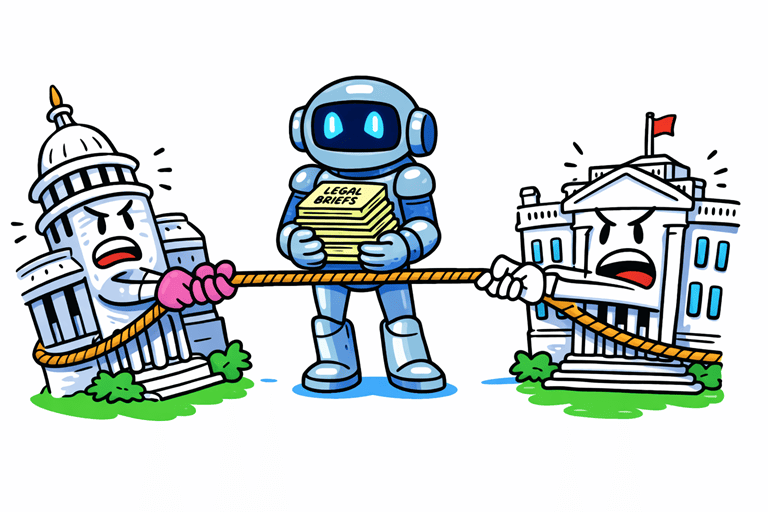
🏢 Institutional War Over AI Rules Is Real
The Bite:
In late 2025, the White House moved to block states from regulating AI, arguing that a single, “light-touch” federal policy was better for innovation.
Congress failed to pass anything. So the executive branch stepped in.
Now states like California and New York are pushing back with their own AI laws.
And the fight is heading to court.
Behind the scenes, tech money is funding both sides, betting that confusion buys time.
No one voted on this rollout. But it’s happening anyway.
Snacks:
The White House signed an executive order aiming to stop states from enforcing AI laws
States passed their own rules anyway, focused on safety, transparency, and child protection
Courts are likely to decide which laws survive, not voters or Congress
Super PACs backed by tech leaders and safety advocates are gearing up for 2026 elections
Lobbying money is already shaping which rules get challenged and which don’t.
Why it Bites:
This isn’t a debate about whether AI should be regulated.
It’s about who gets to decide.
Right now, the answer looks like: whoever can afford the longest legal fight.
Companies ship products that cause real harm, promise federal rules later, and quietly challenge state laws in the meantime. That delay is the strategy.
The risk isn’t overregulation. It’s regulation by default, written in courtrooms, shaped by donors, and enforced after damage is already done.
If Congress stays frozen, AI policy won’t be made by lawmakers. Instead, by lawyers.

Everything Else
🧠 You Need to Know
📎 Apple’s AI Pin: The Wearable That Could Replace Your Smartphone
→ Apple is reportedly exploring a screenless AI wearable built around voice, gestures, and ambient computing.
🗺️ Google Maps Adds Gemini Travel Planning
→ Google is rolling out Gemini-powered trip planning and itinerary tools directly inside Maps.

⚖️ America’s AI Regulation Fight Is Headed to Court
→ A White House executive order aims to block state AI laws, setting up legal showdowns with states pushing safety and transparency rules.
🍎 Apple’s Next Siri Chatbot Leaks
→ Leaks suggest Apple is building a more conversational, AI-first Siri with deeper system-wide integration.

🚨 Grok Deletion Requests Could Trap Victims in Musk’s Court
→ xAI claims victims who asked Grok to remove fake nudes accepted its terms, potentially forcing lawsuits into Elon Musk–favored Texas courts.

How was today's Daily Bite? |
— Eder | Founder
— Doka | Editor
Snack Prompt & The Daily Bite
Ticker: FCCN | Trade FCCN Here
Follow Along: FCCN on Yahoo Finance

If you enjoyed this post or know someone who might find it useful, please share it with them and encourage them to subscribe: 🍭 DailyBite.ai