- The Daily Bite by Snack Prompt
- Posts
- 💸 Claude cuts prices. ChatGPT upgrades free users. 🆓
💸 Claude cuts prices. ChatGPT upgrades free users. 🆓
The real savings behind the AI price war, plus the data needed to model life.

Samuel Cruz
October 08, 2026
Sponsored by


Good morning.
This week, Claude got cheaper to run, and a better free ChatGPT starts rolling out today. Meanwhile, Biohub’s $1.8 billion effort is a reminder that useful AI still needs expensive, carefully collected data.
The opportunity for the rest of us: spend less on access and more attention on the inputs, checks and judgment that make the output worth using. It may not be easy, but if done right, its a productivity powerhouse.
Today’s Menu
The Big Bite: Cheaper Claude, a free ChatGPT upgrade and the meaning
Second Bite: Biohub’s $1.8B effort to build the data for a virtual cell.
Fast Snacks: Chip financing, proof checking, and human judgement
Toolbox: Decision models, games you can prompt and an agent update.
Thursday, October 8, 2026 · 6 minute read
The Big Bite · Anthropic & OpenAI
💸 The AI Price War Hits Your Budget
The Bite: More useful AI is moving into smaller budgets. Anthropic has cut the price of Haiku 5.5, its model for quick, repetitive work. Meanwhile, OpenAI says GPT‑6 Luna and Intelligent UI begin rolling out to free ChatGPT users today.
Two different deals. Builders pay less to run tasks through Claude's API. ChatGPT users get access to a newer model and answers that can include interactive charts, forms and calculators.
The catch behind 90%: Haiku's token prices are 90% lower than Haiku 4.5 for prompts up to 100,000 tokens. Beyond that, the reduction is 50%. Anthropic estimates roughly 75% lower running cost on average. Your whole AI bill has not magically shrunk by 90%.
Why it Bites: A task that was too expensive to automate might now deserve a trial with Haiku. Think sorting incoming requests, summarizing documents or giving a larger agent a cheaper helper. And there’s plenty of that work.
As for Intelligent UI on GPT-6, free ChatGPT access is rolling out. It may not appear in every account right away, be on the lookout.
Our take: For Haiku, replace your pricier or underperforming agent with it on a task you understand. Count the correct completions, retries and time spent fixing mistakes. A bargain model earns its place when the finished work gets cheaper. Although the price tag definitely starts the conversation.
A CRM so smart, it updates itself.

HubSpot's CRM is so smart, it now updates itself. Calls get logged and summarized the moment they end. New leads get researched and a first outreach drafted, automatically. Deals move forward on their own, with next steps flagged before you have to ask.
Even the one repetitive task you've been meaning to fix can now run itself, no code required. Customers using it are already seeing the difference.
This isn't the CRM you have to work hard to figure out. It's the one already working before you log in.
Second Bite · Biohub
🧬 Before AI Can Model Life, Someone Has to Measure It
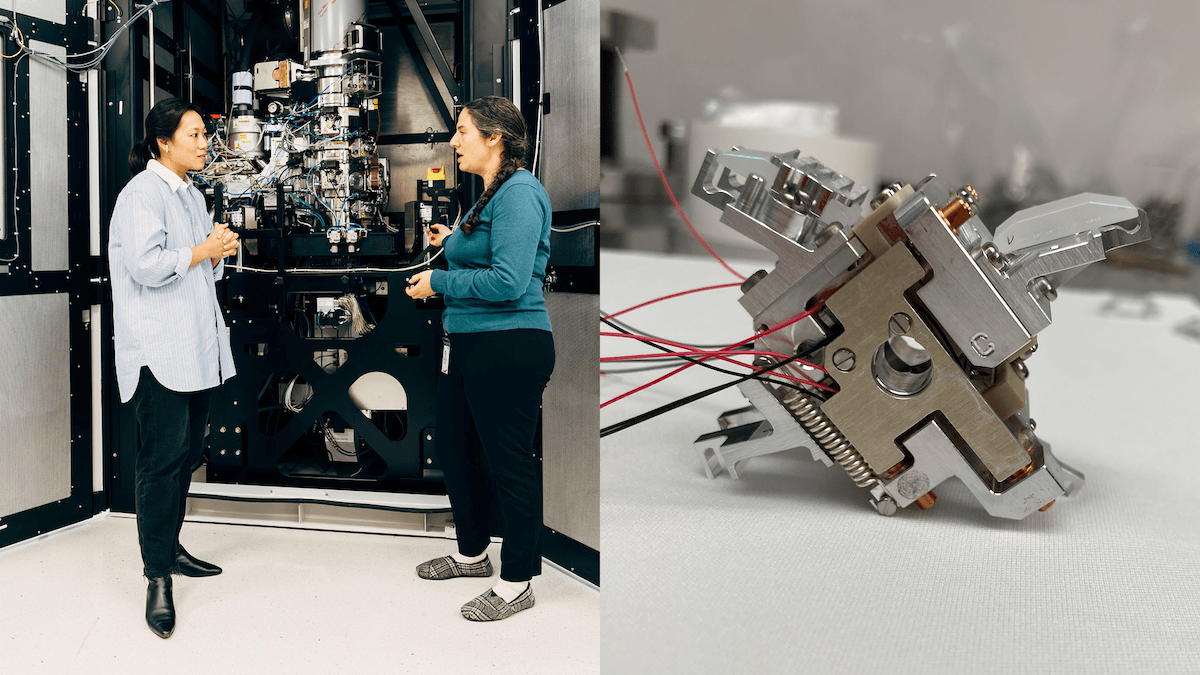
The Bite: Biohub and its partners have announced a $1.8 billion combined commitment to biological data and infrastructure. The ambition: give researchers the measurements needed to build AI models that predict how cells respond to changes.
Think of a virtual cell as a place to test a biological idea digitally before choosing the next experiment in a real lab. Getting there requires enormous amounts of reliable data about how living cells actually behave.
Follow the money: This is not $1.8 billion in fresh cash handed to Biohub. The total combines funding and resources, including Biohub's existing $500 million commitment and NIH datasets built through more than $500 million in prior investment. Google DeepMind, Isomorphic Labs and Meta are collectively investing $300 million.
Why it Bites: The cell is the underlying machinery for life and AI has been making its way into bio impact. Leveraging AI to understand it could help springboard top bio solutions. Think of the 722 math papers from yesterday that had gone unsolved for a while. However, better AI needs better data to learn from. Making biological measurements accessible could help more research teams investigate disease, but this announcement is a commitment to build that foundation, not a new treatment.
Our take: Watch what becomes usable: open datasets, consistent measurements and predictions that survive real experiments. That is how a multi billion dollar headline starts turning into useful science, hopefully beyond past capabilities.
Fast Snacks
💳 Cheaper AI Still Needs Expensive Chips
Broadcom is arranging more than $50 billion to finance its custom OpenAI chips, The Wall Street Journal reports. These are financing discussions, not a completed deal. Our read: falling prices for users and rising infrastructure bills can coexist. The useful business question is whether customer revenue eventually covers the hardware.
🔍 A Proof Check Has a Translation Problem
A Tuesday preprint flags mismatches between OpenAI's written Navier Stokes argument and its translation into Lean, software that checks mathematical proofs. The authors explicitly stop short of declaring the original proof wrong. The lesson travels beyond mathematics: checking an AI's output also means checking that it answered the question you actually asked.
🤝 Model Watch: Who Is Doing Your Agent's Work?
Useful context for the rival model debate: Grok Bot's documentation says its underlying models can change, with usage and billing tied to the model handling each request. This is existing documentation, not proof that a specific Claude integration is live. Check which providers receive your task and what each completed job costs.
🧠 Better output is not the same as better judgment
A three month study of 133 patent lawyers found AI improved drafting quality. But gains on a later task completed without AI were concentrated among more experienced lawyers; juniors showed no average improvement. The study covers one profession and setting. For teams using AI to train people, the useful question is what they can still explain and evaluate after the assistant disappears.
Toolbox
🎯 Liquid d1: decide without writing an essay
Liquid released downloadable decision models, a material update to its earlier API announcement. The d1 3B model chooses or scores defined options. Its Omni 600M variant adds audio and vision, but is an early research release with audio limited to 30 seconds. Useful for a narrow routing or classification experiment. Review the model cards and Liquid's license before deployment.
🎮 Playground: turn an idea into a game
Google's experimental Playground lets users prompt, play and share games. Try a small learning game with one clear rule. Treat it as an experiment; the announced Unity integration is still coming. We have not verified universal access or pricing.
🐳 Docker Agent: a fresh update for builders
Docker Agent v1.149.0 adds support for skills from public GitHub repositories and an evaluator backend. It is an update to an existing tool for defining agents and their tools, not a new product launch. Inspect third party skills before running them. This is a release note recommendation, not a hands on review.
Real or AI?
One image is a real photograph of rover test vehicles. The other is an AI recreation of the same idea. Can you determine which one is real?
Image A

Image B

Which image is the real photograph? |
Photo credit: Courtesy NASA/JPL-Caltech. Photograph source and answer.
Happy snacking. See you tomorrow! 🍭

Eder & Sam
along with the Snack Prompt & Daily Bite team
Know someone trying to make sense of AI at work? Forward this issue and send them to DailyBite.ai.