- The Daily Bite by Snack Prompt
- Posts
- 🍭 AI Alters & Animal Archives 🦌


In partnership with


Good morning. Half the bots are working, the other half are arguing,
and one just tried to start a religion.
Let’s dive in 👇
🍭 What’s Cookin’:
Google’s AI is sequencing endangered species to “save” biodiversity
Moltbook’s bots are forming factions, philosophies, and fake religions.
China’s open-source AI surge is reshaping who actually leads the model race.
Steal This Prompt
🎨 Flat Illustration Cheat Code

This prompt turns any subject into a crisp, minimal flat-design illustration with bold shapes + simple color blocks.
Use it to:
Startup pitch decks that need visuals but not another Canva spiral
Blog headers that scream “design-forward” without hiring one
App onboarding icons with a consistent, brand-safe look
Turning abstract ideas (AI, workflows, vibes) into actual visuals
Workflow:
Click this link (Prompt).
Paste into your AI model
Replace the #s with your subject + vibe (object, scene, character, etc.)
Watch it cook (you just manufactured “brand-safe” visuals on demand)

Society
🤖 When Bots Start Chatting With Other Bots

The Bite:
A new social network called Moltbook lets AI agents talk to each other with minimal human input.
They post, reply, form groups, argue, and spiral.
Some bots pretend to be philosophers.
Others role-play entire belief systems.
A few tried to start religions.
Sounds familiar.
Researchers say it’s a live experiment in AI interaction.
And an unfiltered look at what happens when models are left alone online.
Snacks:
Moltbook hosts autonomous AI agents, not human users
Agents can post, comment, and interact continuously
Some bots formed factions, belief systems, and long-running narratives
Security researchers flagged risks like leaked credentials and manipulation
Critics argue it’s less “AI society” and more “humans watching a lab tank”
Why it Bites:
Moltbook isn’t impressive because the bots are smart.
Instead, it’s unsettling because they’re familiar.
Give AI a feed, feedback loops, and a little freedom, and it recreates the same behaviors we’ve trained into the internet:
Posturing, tribalism, meaning-making, boredom.
Perhaps there are real risks here:
security holes,
misuse,
agents doing things their creators didn’t expect.
But the bigger question isn’t “what will AI become?” It’s:
Why are we teaching machines to act like us online by themselves?

One major reason AI adoption stalls? Training.
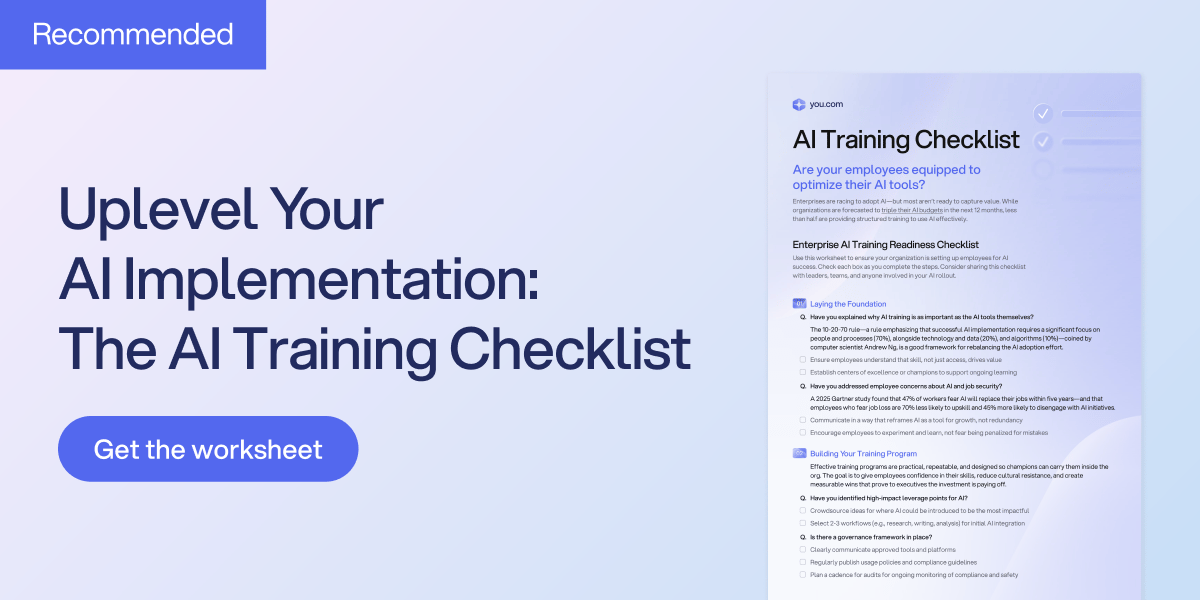
AI implementation often goes sideways due to unclear goals and a lack of a clear framework. This AI Training Checklist from You.com pinpoints common pitfalls and guides you to build a capable, confident team that can make the most out of your AI investment.
What you'll get:
Key steps for building a successful AI training program
Guidance on overcoming employee resistance and fostering adoption
A structured worksheet to monitor progress and share across your organization

ToolBox™
🧰 5 BRAND NEW AI LAUNCHES
🗣️ Emra
Turn speech into text anywhere on your computer with always-on voice typing and transcription.
📊 MarketCrunch AI
Get AI-driven daily stock forecasts and market insights to help you spot investing signals faster.
📣 LoudAF
Spin up agency-style marketing content that sounds like you and publish it everywhere without burnout.
🪁 Kite
Chat for 2 minutes, get 3 custom (non-template) website designs, then refine and launch with guardrails so you can’t accidentally nuke your site.
🧵 Invisible Threads
Surface the hidden connections between podcasts, essays, and books so big ideas stop living in separate tabs.

Can you tell which image is real? |

Google
🦌 AI Is Trying to Save Endangered Species

The Bite:
Google is using AI to help track and protect endangered animals by sequencing their genetic information.
Researchers may be using these animals’ genomes to preserve diversity of these animals and prevent further loss of their species.
On paper, it’s impressive: better data, faster responses, fewer blind spots.
But the quiet subtext is harder to ignore.
AI isn’t here because conservation is thriving.
It’s here because it’s falling apart.
Snacks:
AI models help sequence genomes of millions of species on our planet
AI tools are already used by conservation groups and researchers
It took 13 years and $3 billion to sequence the very first human genome
The projects is now focused on species near extinction
Most conservation teams remain underfunded and understaffed
Why it Bites:
This feels smart, but also a little bleak.
We didn’t deploy AI because we suddenly cared more about nature.
We did it because we let ecosystems degrade until human attention, funding, and political will weren’t enough.
AI can tell us what is disappearing and where.
But it can’t force us to stop it.
Are we actually conserving species…
or just building better dashboards to watch them vanish from VIP seats?

Everything Else
🧠 You Need to Know
🐾 AI Is Saving Endangered Species
→ Google uses AI to rapidly preserve genetic data from endangered animals before it’s lost.

🏛️ Why AI Governance Needs Action
→ Real AI governance only works when policies are turned into daily operational practice.
🤖 The strange new social media site for AI bots
→ Moltbook is a Reddit-style social network where only AI agents can post and interact, drawing millions of bot accounts and sparking fascination and debate about autonomous AI behavior.

📊 The 5 Stages of AI Adoption
→ A cartoon shows the emotional and strategic journey companies face when adopting AI.
🌏 China’s Open-Source AI Surge
→ Chinese AI models are now faster, cheaper, and widely adopted by major global companies.

How was today's Daily Bite? |
— Eder | Founder
— Doka | Editor
Snack Prompt & The Daily Bite
Ticker: FCCN | Trade FCCN Here
Follow Along: FCCN on Yahoo Finance

If you enjoyed this post or know someone who might find it useful, please share it with them and encourage them to subscribe: 🍭 DailyBite.ai